
In twelve years, we will be upon the bi-centennial year of the revolver. In 1836, Samuel Colt patented the plans for the Colt Patterson revolver. This forerunner to present day revolvers operated using black powder, percussion caps, and the earliest models had to be disassembled to be reloaded. From then to now, the concept largely remains the same- a cylinder containing ammunition, is rotated and fired. Capacity has fluctuated some but is still largely the same. We’ve seen much innovation in terms of cartridge development along the way, with ever increasing ballistic performance and proven track records for hunting and self defense. Has the revolver lived it’s life and been surpassed by semi-automatic handguns for self defense? I used to say yes, vigorously, but now find myself carrying a revolver 95% of the time.
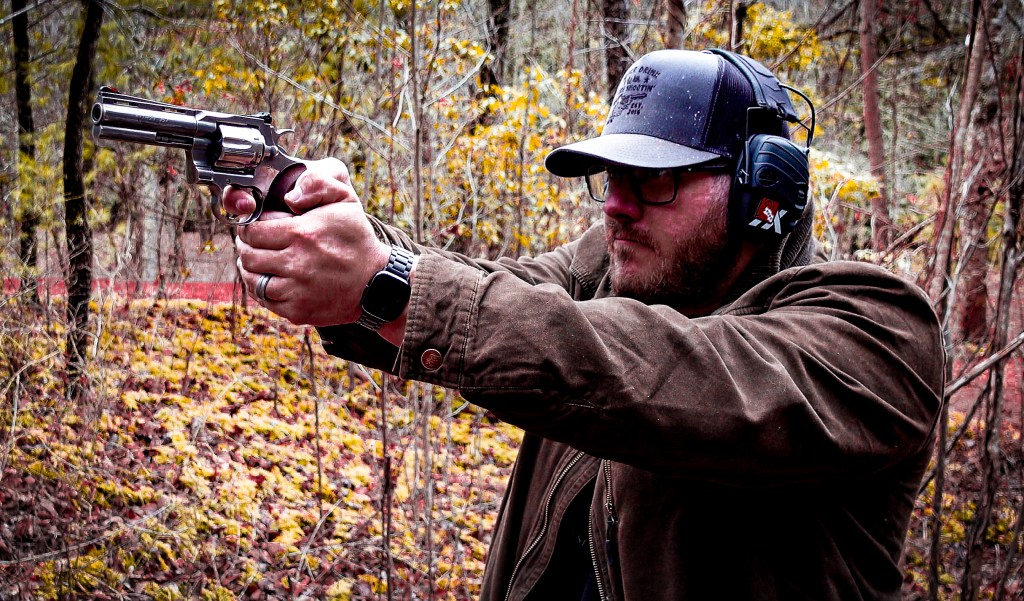
To be clear, I never had a problem with revolvers for hunting or target shooting. There is no denying that the chamberings for revolvers easily outpace those for semi-autos in terms of bullet options and raw energy. But I considered those who chose to carry revolvers as archaic, and willfully ignorant of the progression of firearms technology. I thought that they were uselessly risking their safety by clinging to technology that been abandoned by even the military with the adoption of the 1911 pistol. Obviously, I’ve had a change of heart on the issue. It’s only fair to explain why.
I did cover this a little while back on my YouTube channel. Video below if you’d like to watch as well.
This 180 degree shift happened because life happened. When I left the gun shop I had been managing as a full time job, and got into landscaping, grading, and building retaining walls, I learned fairly quickly that what made a decent carry gun for driving to and from a retail establishment and being a counter jockey, did NOT necessarily translate well to the blue collar, manual labor life. It took all of a week before I started leaving my carry setup in the truck out of sheer annoyance and discomfort. I simply couldn’t keep bending, toting lumber, setting ties, and so on with a red dot and WML (weapons mounted light) equipped compact handgun holstered in the appendix position. Being very fond of appendix carry, and the numerous advantages it offers, changing the gun’s position wasn’t an option. So it was time to change the gun itself.
I knew enough to understand that a smaller semi-auto handgun wouldn’t necessarily help me. We’ve seen a push in recent years to pack in a lot of firepower into truly unprecedented tiny packages. Things like the Sig Sauer P365, Springfield Armory Hellcat, and Taurus GX4. There’s nothing inherently wrong with these guns, I just don’t shoot them well, typically. So those were out. I started paying attention to sources I hadn’t really read, watched, or listened to, at least in the area of concealed carry. Folks like Chuck Haggard, Caleb Giddings, Rhett Neumayer, Matt Landfair and his guests on Primary and Secondary. I found myself in a maelstrom of information I was having a hard time digesting. These guys all touted the situational benefits of a revolver. Mind you, they didn’t claim a wheelgun was the be all, end all of handgun design and carry choices. Rather, they approached the subject with a nuanced and well thought out position that revolvers could be the right choice, depending on a number of factors.
Much like any number of subjects we discuss in this day and age- nuance typically seems to be missing. Many of us have collectively forgotten that “It depends,” is a perfectly valid answer to a whole lot of questions. This was a refreshing bit of fresh air for me to be met with. It since has made me take a different tack with my own videos and posts. Truthfully, “It depends,” is the right answer for your carry setup, as well as mine. What might serve me well going to Atlanta, may not serve me well building a retaining wall, as I quickly discovered. The inverse may be true as well, although I was definitely in pain working with my uber-tactical loadout, and have not yet had to use any firearm, much less my Call of Duty cosplay setups, going to the zoo or The Varsity. (If you haven’t eaten at the Varsity, and you’re going through Hotlanta- please do so. Get the onion rings. Thank me later)
One thing I quickly noted was the love affair some of the aforementioned guys had with .32 caliber revolvers. Specifically, revolvers chambered in the frequently unheard of .327 Federal Magnum. Away I went, digging for more information. Come to find out, the hot little magnum comes with several benefits. For starters, it can hold one more round than its .38 Special or .357 Magnum counterparts due to the cartridge’s thinner dimensions. It also is launching a lighter bullet, which reduces recoil. This becomes increasingly important when discussing carry-sized revolvers. It also offers the user four calibers- .327 Federal Magnum, .32 H&R Magnum, .32 S&W Long, and .32 S&W. While both of the .32 S&W chamberings are definitely anemic by anyone’s standards, they do provide the user with additional options for reduced recoil loads to match the user’s needs, or those of their family if the firearm is going to be used and accessed by more than one shooter, with differing physical capabilities or limitations.
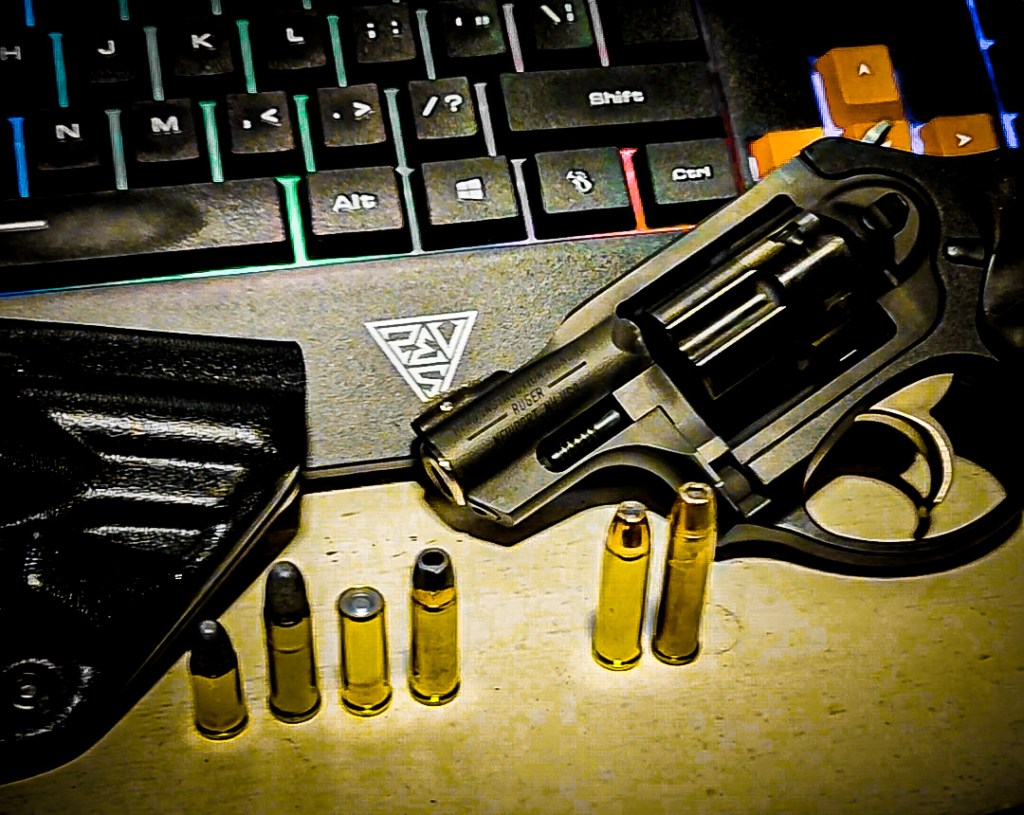
The more I read and learned about the .327 Federal Magnum, and it’s siblings, the more I saw the appeal of the caliber, particularly in a small, easily carried revolver. The ballistics of both the .32 H&R Magnum, and .327 Federal Magnum were up to task. Fortunately, I’m a reloader, and a quick scouring of the internet showed me that I could get enough components to load up a healthy stock of practice rounds to face the biggest issue- I couldn’t shoot a revolver well at all.
When we, as concealed carriers, put a firearm on our person, we are assuming no small responsibility. We frequently hear about and discuss- rightfully so, the rights the 2nd Amendment protects. However, the subject of responsibility is oft forgotten. Should we have the worst case scenario develop in which we have to employ a firearm in self defense, we will be legally and morally held to account for where those rounds are fired, and what they impact. So, with that in mind, I started digesting everything I could on shooting revolvers well. A special thank you to Caleb Giddings for helping me on that path and answering my newbie questions along the way. He’s Mr. Revolver on YouTube, and well worth watching if you’re even considering carrying a revolver, or wanting to just get good at shooting them.
After some time practicing both dry and live fire drills, I was attaining reasonable proficiency, and started carrying while continuing to practice religiously so that I could increase my proficiency. I have a write up on the holster I’ve been using for that here.
Now that we’ve covered my journey to carrying a revolver most of the time, let’s talk about what they bring to the table. To quote Caleb Giddings in this video, revolvers have a “U- Shaped utility curve.” Simply put, that means revolvers are at their peak utility for new gun owners/ shooters, and those who are on the other end of the spectrum- the experienced, regular practitioners. They are simple to load and unload, easy to verify whether loaded, and superbly simple to operate. At the most rudimentary level- point and pull trigger. By no means am I saying here that folks new to firearms can’t learn to operate a semi-auto. They probably can, but as I’ve said a couple times through this write up, “It depends,” is perfectly valid. There may be dexterity issues common with age or injury that make operating the slide on a semi-auto impossible or uncomfortable, and so on.
A modern double action revolver is just about the safest design to carry as well. You have a heavy double action trigger that will alleviate the chances of the revolver being fired unintentionally. While proper trigger finger placement and firearms safety rules are always paramount, consider the possibility of foreign objects getting in the trigger guard upon re-holstering, like a jacket draw cord, keychain, etc.
Another win for the double action revolver is that there is no slide to be knocked out of battery. On a semi-automatic, if the slide is pushed slightly to the rear, the gun is typically rendered inoperable. This could happen in an entangled fight, as self defense distances are frequently very close. A revolver does not suffer this particular malady, and can actually be fired from a pants or jacket pocket if the need arose.
Numerous gun personalities have said “Carrying a gun is supposed to be comforting, not comfortable.” Hell, I’ve said it, much to my embarrassment. That’s all well and good, until it becomes so uncomfortable that you’re leaving the gun at home, or worse, in a vehicle unattended because you can’t bear to carry it. It’s been my experience that a compact revolver, such as my Ruger LCRx in .327 Federal Magnum, is orders of magnitude more comfortable to carry. Does that matter? You guessed it…. “It depends.”
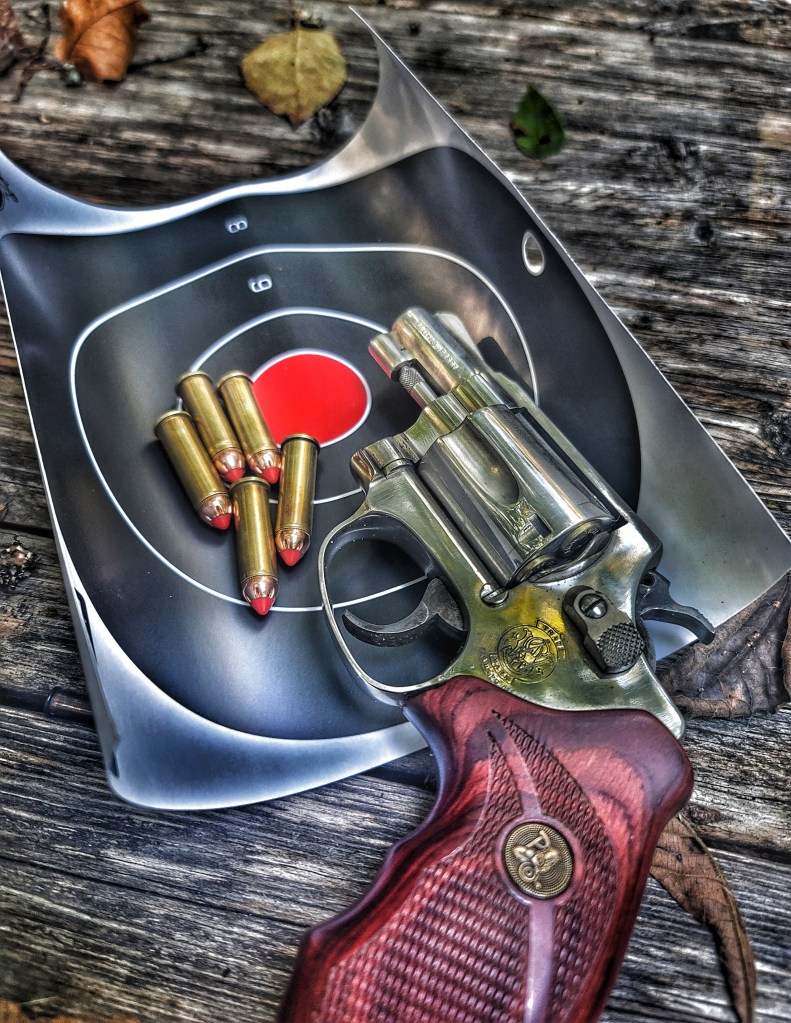
The elephant in the room is round capacity. I know the die hard semi-auto folks are eager to remind me of that. Is five or six rounds of ammunition enough to reliably protect your life, and possibly the lives of your family members? You know what’s coming. “It depends.” Do a realistic assessment of where you live, work, and travel to and through. What are the most likely scenarios you might encounter? Remember that a firearm is just one tool you should have at your disposal for defending yourself, and far from the most important. The most important thing anyone can do is maintain good situational awareness, and if you have a choice, don’t go somewhere you wouldn’t go unarmed.
What are your thoughts? Are revolvers relics, or relevant?
If you found this article helpful or enjoyable, please consider supporting Nick on Patreon.


